Table of Contents
However, as the digital ecosystem matures in 2025, the definition of a “good” website builder has fundamentally shifted. It is no longer sufficient to merely have a website; one must own a digital asset that is scalable, performant, and capable of integrating with a complex, ever-changing stack of marketing and operational tools. This comprehensive analysis aims to dissect the Hostinger Website Builder not just as a standalone tool, but as a long-term business decision. We will explore its technical architecture, its feature set, and its inherent limitations, before contrasting it with the professional standard for scalable web creation: the Elementor platform. By understanding the nuances of proprietary versus open ecosystems, you will be equipped to make a strategic investment in your digital future that avoids the common pitfalls of early-stage technical debt.
Key Takeaways
- Target Audience Distinction: Hostinger’s builder is engineered for absolute beginners and hobbyists who prioritize immediate ease of use and low upfront costs over long-term design flexibility, technical control, or ownership.
- The “Closed Ecosystem” Trap: Unlike open platforms, proprietary builders like Hostinger’s rely on a “walled garden” architecture. This prevents you from exporting your code, migrating your site to another host, or retaining true ownership of your digital assets.
- AI Implementation Gap: While Hostinger offers basic generative AI for text and logos, professional platforms have advanced to “Agentic AI” that actively assists in complex workflows, strategic planning, and code generation.
- The “Platform” Advantage: A standalone builder often lacks the deep, native integration of critical business tools—such as transactional email delivery, marketing automation, and accessibility compliance—found in comprehensive ecosystems like Elementor.
- Scalability & eCommerce: For serious growth, particularly in online retail, the limitations of a grid-based, proprietary builder (limited to 500 products) often necessitate a migration to a robust, open-source infrastructure like WordPress and WooCommerce.
The State of Website Building in 2025: Contextualizing the Market
To fairly assess any tool, we must first understand the environment in which it operates. The website building market has bifurcated into two distinct categories: Consumer SaaS (Software as a Service) and Professional Platforms.
Consumer SaaS tools, where Hostinger firmly positions itself, are designed for speed and simplicity. They abstract away the technicalities of web hosting, security, and coding, presenting the user with a simplified interface where “what you see is what you get.” The trade-off for this simplicity is control. You rent the infrastructure, you rent the software, and you operate within the strict boundaries defined by the provider. If the provider decides to deprecate a feature, raise prices, or alter their terms of service, you have little recourse because you do not own the underlying code base.
On the other side of the spectrum are Professional Platforms. These solutions bridge the gap between the ease of a visual builder and the raw power of open-source technologies. They prioritize ownership, extensibility, and the ability to integrate with thousands of third-party tools. As we analyze Hostinger, keep in mind that “good” is relative to your trajectory. A tool that is “good” for a weekend project or a temporary landing page may be detrimental to a scaling brand that requires bespoke functionality and data sovereignty.
Analyzing the Hostinger Website Builder: A Technical Deep Dive
Formerly known as Zyro, the Hostinger Website Builder is included as a value-add with Hostinger’s hosting plans. It is a proprietary tool, meaning it runs on code that belongs exclusively to Hostinger. Let’s break down its core components through a strictly functional lens.
1. The Architecture and Interface: The “Smart Grid” System
The core of the Hostinger experience is its “Smart Grid” editor. Unlike traditional WordPress editors or advanced visual builders that use the CSS Box Model (padding, margins, containers, flexbox), Hostinger uses a visual grid overlay. When a user drags an element—a text box, an image, or a button—it snaps to the nearest rectangle on this grid.
From a usability standpoint, this system functions as a constraint mechanism. It ensures that elements align according to the pre-defined rows and columns, preventing users from placing items in locations that might break the layout on mobile devices. It essentially acts as “training wheels” for design.
However, this rigidity comes at a significant cost for professional design. The grid system does not allow for fluid positioning or complex layering (Z-index manipulation) in the same way modern CSS does. It restricts the user to a tile-based approach, which limits the ability to create bespoke, high-end layouts that require precise pixel control or overlapping elements. For example, if you wanted to create a magazine-style layout where a headline partially overlaps a featured image with a transparent background, the grid system would likely force the elements into separate blocks. This architectural decision prioritizes safety over creativity, effectively capping the visual potential of the website.
2. The Template Library and Customization Limits
Hostinger provides a library of approximately 150 templates covering standard categories: portfolios, blogs, landing pages, and simple eCommerce stores. The designs are functional, clean, and cover basic industry needs.
Customization within these templates is restricted to global style changes. Users can modify color palettes and font pairings, but the underlying structure of the template is locked. Unlike professional platforms that offer “Theme Building”—the ability to design the header, footer, archive pages, and single post templates from scratch—Hostinger’s builder confines the user to the existing framework.
This limitation has profound implications for scalability. If you build a 50-page website and decide you want to change the layout of your blog posts to include a sidebar, you cannot simply edit a “Single Post Template.” You would likely have to manually edit every single blog post to accommodate the new design. This lack of dynamic templating turns site maintenance into a manual, labor-intensive process as the site grows.
3. AI Tools: Generation vs. Workflow Augmentation
Hostinger has integrated several AI tools into its offering, focusing primarily on content generation during the initial setup phase.
- AI Logo Maker: This tool generates generic icon-based logos based on brand name inputs. These assets are raster-based or simple vectors, suitable for placeholders but lacking the distinctiveness and file scalability (e.g., SVG exports for print) required for a professional brand identity.
- AI Writer: This text generation tool populates pages with copy based on topic inputs. It functions adequately for filling empty space (replacing Lorem Ipsum) but typically lacks the strategic nuance, brand voice customization, and conversion-focused psychology of human-written copy.
- AI Heatmap: This feature provides a visual prediction of where visitor attention might fall on a page. It is a simulation based on general data sets rather than an analytics tool tracking actual user behavior on the specific site.
The distinction here is critical: Hostinger’s AI creates assets (text, logos), whereas professional AI tools augment workflows (coding, strategy, optimization). Hostinger’s approach is to provide a “good enough” starting point, whereas professional tools use AI to enhance the capabilities of the creator.
4. eCommerce Capabilities and Functional Ceilings
The builder includes a native eCommerce module that allows for the sale of products. It supports major payment gateways and boasts a 0% transaction fee policy (excluding gateway fees), which is a competitive baseline.
However, the platform enforces a hard limit of 500 products per store. This limit serves as a clear indicator of the platform’s intended audience. Beyond the product count, inventory management covers basic variants (size, color) but lacks advanced logic for complex product types. You cannot natively create product bundles, subscription boxes with recurring billing cycles, or products with complex conditional logic (e.g., “if user selects Size XL, add $5”).
The checkout flow is standardized and closed. Users cannot modify the checkout steps or integrate third-party optimization tools to improve conversion rates. Additionally, the lack of an open API or app market means businesses cannot connect specialized logistics providers, 3PL (Third-Party Logistics) warehouses, or ERP systems that are not natively supported by Hostinger. For a growing retail brand, these limitations effectively act as a glass ceiling on operations.
5. SEO and Performance: The “Black Box” Problem
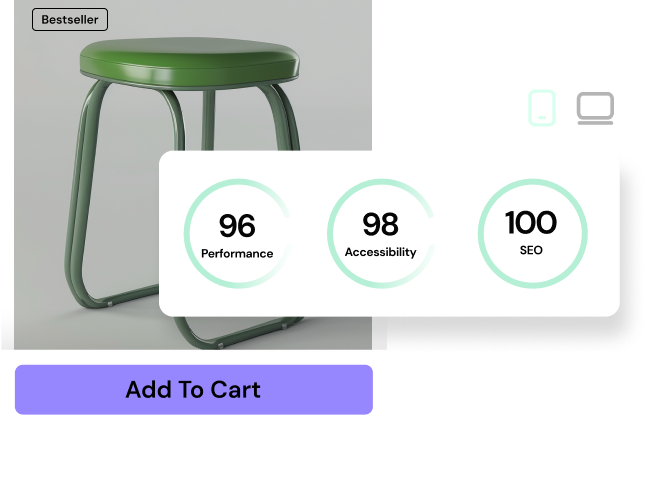
Hostinger leverages its background as a hosting company to provide decent server-side performance, utilizing LiteSpeed cache technologies. This generally results in acceptable Time to First Byte (TTFB) metrics.
Regarding SEO (Search Engine Optimization), the tool provides access to essential meta tags: titles, descriptions, and alt text. However, it lacks the technical depth required for competitive SEO strategies. There is no support for advanced Schema markup (structured data), programmatic SEO (generating pages from datasets), or detailed control over canonical tags and redirects. The sitemap is generated automatically, and users have limited ability to intervene if technical indexing issues arise. This “black box” approach to SEO can be a significant hindrance for businesses relying on organic search traffic for growth, as they cannot implement the granular technical optimizations often required to outrank competitors.
The Hidden Costs of Simplicity: Why Businesses Migrate
While the initial price point and ease of use are attractive, many businesses eventually hit a “glass ceiling” with proprietary builders. This usually happens 12 to 24 months into the business lifecycle, leading to a phenomenon known as “platform migration.”
The Vendor Lock-In Trap
The most significant strategic risk of using Hostinger’s builder is the inability to leave. Because the builder uses proprietary code, the website cannot be exported. If a business decides to move to a more powerful platform in the future, the data cannot be migrated. The entire website must be rebuilt from scratch—copying text manually, downloading images one by one, and re-creating layouts. This creates a high “switching cost” that effectively locks growing businesses into a platform that no longer serves their needs. The cost of “saving time” at the beginning is paid back with interest when migration becomes necessary.
The Integration Gap
Modern digital businesses operate on a stack of interconnected tools: CRM (Customer Relationship Management), email marketing, analytics, and social media pixels. In an open ecosystem, these tools connect via plugins or APIs. In Hostinger’s closed environment, connectivity is limited to native integrations. If a business requires a specific booking system for a salon, a niche ticketing platform for events, or a specialized loyalty program that Hostinger does not support, there is no workaround. The lack of a plugin repository creates operational silos where data cannot flow freely between systems.
Scalability Ceilings
When traffic scales, infrastructure matters. Proprietary builders often share resources across thousands of sites on the same server cluster. If a neighboring site experiences a traffic spike, performance can degrade. Furthermore, as your database of products or blog posts grows, visual editors on closed platforms can become sluggish, as they are rarely optimized for high-volume content management in the way that database-driven CMS platforms like WordPress are.
The Professional Standard: The Elementor Platform
If Hostinger is a “starter home,” Elementor is the architectural blueprint for a skyscraper. It represents a fundamental shift in philosophy: from a restricted, closed tool to an open, comprehensive Website Creation Platform.
Elementor is not just a “page builder”; it is an ecosystem that empowers web creators to build, manage, and grow professional websites without limitations. It combines the ease of use of a visual editor with the infinite extensibility of WordPress, the operating system that powers over 43% of the web.
1. From Builder to Platform: A Unified Ecosystem
The distinction between a “builder” and a “platform” is critical. A builder helps you arrange pixels on a screen. A platform provides the infrastructure for a digital business. Elementor has evolved to offer a unified solution that includes managed hosting, AI workflow tools, marketing automation, and performance optimization, all under one roof. This integration ensures that every component of the website—from the server it lives on to the email marketing campaigns it sends—works in harmony, eliminating the fragmentation often associated with piecemeal WordPress setups.
2. Managed Hosting Infrastructure: The Foundation of Performance
For users who fear the technical complexity of WordPress, Elementor Hosting offers a seamless, “SaaS-like” experience.
Unlike Hostinger’s shared hosting environment for its builder, Elementor Hosting is built on the Google Cloud Platform (GCP) using premium C2 machines. It integrates Cloudflare Enterprise CDN (Content Delivery Network) by default. This enterprise-grade infrastructure ensures that websites are not only fast but secure, with built-in DDoS protection and a Web Application Firewall (WAF). Users get the power of world-class cloud engineering without ever needing to touch a command line. This infrastructure is typically reserved for enterprise clients but is democratized through the Elementor platform.
3. Pixel-Perfect Design Freedom: Beyond the Grid
Where Hostinger relies on a snapping grid, Elementor provides professional-grade design tools rooted in modern CSS standards.
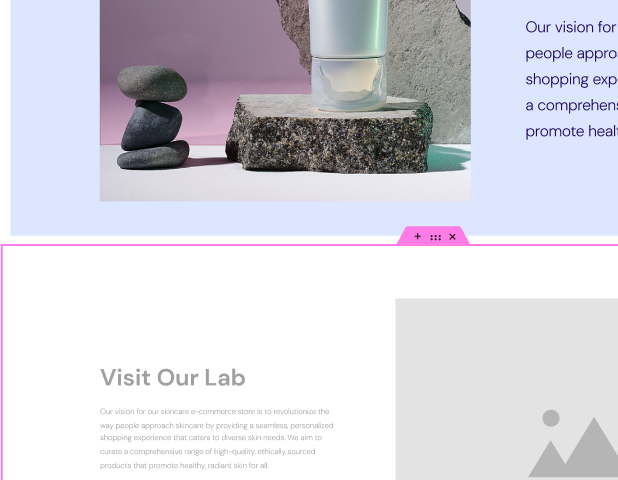
- Flexbox & CSS Grid: Elementor for Designers gives designers control over Flexbox containers and CSS Grid layouts. This allows for fluid, complex arrangements that adapt proportionally to any screen size. You are not locked into a table-like structure; you can create overlapping layers, vertical alignments, and complex responsive behaviors.
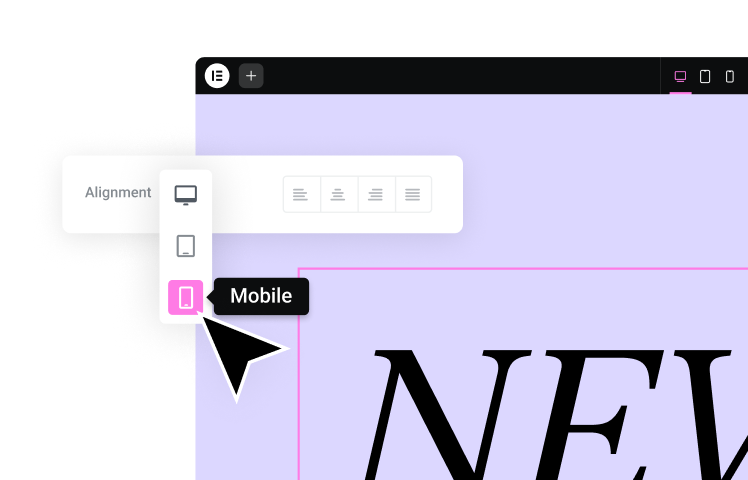
- Responsive Control: Unlike the binary “Desktop/Mobile” view of many builders, Elementor allows for granular design adjustments across seven different active breakpoints. You can tailor the experience for ultrawide monitors, laptops, tablets, and various mobile sizes independently.
- Motion & Interaction: The platform includes a robust interaction engine. You can create mouse-tracking effects, entrance animations, and scroll-triggered movements (parallax, transparency, scaling) without writing a single line of JavaScript. This capability allows for the creation of immersive, award-winning web experiences that proprietary builders simply cannot replicate.
4. The AI-Powered Workflow Revolution
While Hostinger offers basic content generation, Elementor has integrated AI into the entire lifecycle of web creation. This is known as the “AI Web Creation Workflow.”
Phase 1: Strategy & Planning
The AI Site Planner solves the “blank page” paralysis. Instead of starting with a template, you describe your business to the AI. It generates a comprehensive website brief, a complete sitemap, and high-fidelity wireframes in minutes. This ensures that your site is built on a solid strategic foundation before you even begin designing.
Elementor AI sits directly inside the editor. It is context-aware. If you are editing a heading, it suggests titles. If you are in a code widget, it can write custom CSS or HTML snippets to achieve specific effects. It can also generate unique images and modify existing ones (generative fill/expand), ensuring your visual assets are unique to your brand.
Phase 3: Agentic Execution
Moving beyond generation, Elementor is pioneering Agentic AI. These tools can perform multi-step tasks autonomously, such as “Audit my site for accessibility” or “Translate this entire page to Spanish,” effectively acting as a virtual member of your team. This capability fundamentally changes the productivity equation for web creators, allowing them to offload routine maintenance tasks to the AI.
5. Advanced eCommerce with WooCommerce
For online retailers, the difference is night and day. Elementor powers the WooCommerce Builder, allowing for total visual customization of the world’s most popular eCommerce engine.
- Unlimited Scalability: There are no product limits. You can sell 50 items or 50,000.
- Dynamic Design: You can design a “Single Product” template once, and it will dynamically apply to your entire inventory. This ensures consistency and makes updating the design of thousands of products instantaneous.
- Funnel Optimization: You can build custom “Thank You” pages, optimize cart flows, and design distractions-free checkout pages to maximize revenue.
- Extensions: Because it runs on WooCommerce, you have access to thousands of extensions for subscriptions, bookings, dropshipping, and global tax calculation. This flexibility allows you to build a tailored retail operation rather than fitting your business into a pre-made box.
6. Marketing, Growth, and Optimization
A platform must help you grow, not just build. Elementor integrates essential growth tools that standalone builders often lack.
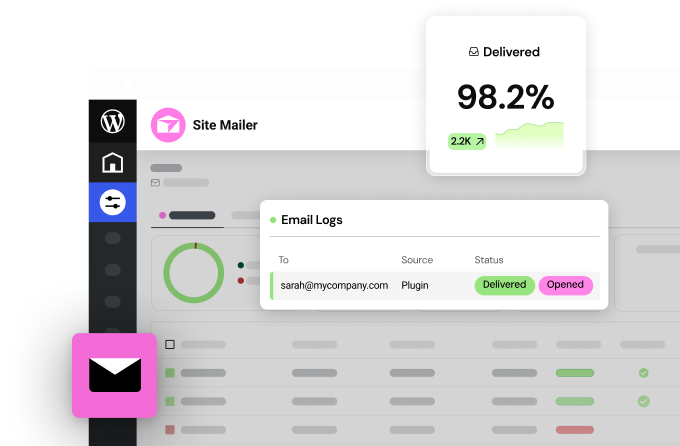
- Site Mailer: One of the most common technical pain points in WordPress is unreliable email delivery (contact forms going to spam). Site Mailer is an integrated plugin that ensures transactional emails hit the inbox without complex SMTP configurations.
- Send by Elementor: This integrated marketing solution allows you to manage leads and send beautiful email campaigns directly from your dashboard. It connects seamlessly with your Elementor forms, enabling automated sequences like “Welcome” emails or “Abandoned Cart” recovery. Send by Elementor simplifies the marketing stack by keeping everything under one roof.
- Image Optimizer: Speed is a ranking factor. The Image Optimizer by Elementor automatically compresses media and converts it to modern formats (WebP/AVIF), ensuring your site remains lightweight and fast without manual intervention.
7. Inclusivity and Compliance
As web accessibility becomes a legal imperative (ADA, EAA), Elementor leads with Ally by Elementor. This tool scans your website for accessibility violations against WCAG standards and provides actionable remediation steps. This level of compliance support is virtually non-existent in basic proprietary builders, protecting your business from potential legal liabilities and ensuring your site is usable by everyone.
Strategic Comparison by Use Case
To make the best decision, let’s look at three common user scenarios that illustrate the practical differences between the tools.
Scenario A: The Content Creator / Blogger
- Hostinger: Offers a simple blog module. You can write posts and add images. Customization of the blog layout is limited to basic stylistic changes. If you want to add a “Related Posts” section with specific logic or a custom author bio box, you are restricted to the default options.
- Elementor: Offers the Loop Builder. You can design the exact layout of your post “cards”—choosing where the title, date, author, and featured image appear. You can create dynamic archives, author pages, and search results. For a creator whose content is their product, Elementor offers the necessary control to stand out and monetize effectively.
Scenario B: The Digital Agency
- Hostinger: Difficult to hand off to clients. If the client needs a feature Hostinger doesn’t have, the agency risks reputational damage. There is no granular user role management to protect the site design, meaning a client could accidentally break the layout.
- Elementor: A complete agency solution. The Role Manager allows agencies to lock specific design aspects so clients can edit text but not break the layout. The Notes feature facilitates collaboration directly on the canvas. Agencies can build complex, bespoke solutions that command higher fees and retain clients on maintenance plans.
Scenario C: The Growing eCommerce Brand
- Hostinger: Adequate for a boutique selling 10 items. But if you need to integrate with a warehouse management system, offer “Subscribe & Save” options, or implement dynamic pricing based on user roles, you hit a functional wall.
- Elementor: With Ecommerce Hosting, you can add the “WooCommerce Subscriptions” plugin. You can connect to ShipStation for fulfillment. You can use dynamic tags to show different content to logged-in VIP customers. The platform scales with your revenue, accommodating complexity as you grow.
Financial Analysis: Total Cost of Ownership (TCO)
When evaluating cost, one must look beyond the introductory sticker price to the Total Cost of Ownership (TCO) over a 3-year period.
Hostinger often markets aggressively low introductory rates (e.g., $2.99/mo). However, these rates typically spike upon renewal, often increasing by 200-300%. Furthermore, the “cost” includes the opportunity cost of features you cannot implement. If you need advanced email marketing or specific integrations, you may have to pay for separate, disconnected tools, driving up your monthly spend. The highest potential cost is the “migration cost”—the time and money required to rebuild your site when you eventually outgrow the platform.
Elementor offers a transparent value proposition. With Elementor Hosting, the cost includes the hosting, the Pro builder license (usually sold separately), the theme, and premium support. When you factor in the value of the included tools—Image Optimizer, Site Mailer, and advanced marketing features—Elementor often emerges as the more economical choice for a serious business over a 3-year horizon. You are investing in an asset you own, rather than renting a limited service.
Get started with Elementor and secure your free domain name today.
Conclusion: Making the Intelligent Choice
So, is Hostinger a good website builder?
If you are a hobbyist, a student, or a temporary project owner who needs a URL live in under an hour for the absolute lowest upfront cost, Hostinger is a competent tool. It does exactly what it says on the tin: it builds simple websites quickly.
However, if you are building a business, a brand, or a career, you need more than a builder; you need a foundation. A website is a long-term asset. Building it on “rented land” in a closed ecosystem is a strategic risk.
Elementor offers the professional alternative. It provides the same ease of use through its visual editor and AI tools but backs it with the power, security, and infinite scalability of the open web. By choosing the Elementor Platform, you are not just building a website for today; you are investing in a digital presence that can evolve, grow, and succeed for years to come.
Frequently Asked Questions
1. Can I migrate my Hostinger website to Elementor later?
No, there is no direct migration path. Hostinger uses a closed, proprietary code base. You cannot export your design or database. If you start on Hostinger and decide to move to Elementor later, you will have to manually copy-paste every piece of text and re-download/upload every image, essentially rebuilding the site from zero. This is why starting on an open platform like Elementor is recommended for anyone anticipating growth.
2. Is Elementor strictly for developers?
Not at all. Elementor was built to democratize web design. Its interface is entirely visual and drag-and-drop. While it is powerful enough for developers to use (allowing custom code and CSS), the vast majority of its 18 million users are designers, marketers, and business owners who do not write code. The new AI Site Planner makes it even easier for beginners to get a professional starting point.
3. How does Elementor’s hosting compare to Hostinger’s?
Hostinger’s builder plans typically use shared hosting resources, which can be slower if other sites on the server are busy. Elementor Hosting utilizes the Google Cloud Platform (C2 Machines) and Cloudflare Enterprise CDN. This is a managed, isolated cloud environment designed specifically for high performance and security, ensuring your site remains fast even during traffic spikes.
4. What are the product limits on Elementor eCommerce?
There are none. Elementor uses WooCommerce, which is open-source software. You can upload an unlimited number of products, creating as many categories and variations as you need. Hostinger’s builder is currently capped at 500 products, which can be a significant limitation for growing stores.
5. Does Elementor offer email accounts?
Elementor focuses on website infrastructure. While Elementor Hosting ensures your site sends transactional emails reliably via Site Mailer, it does not host your personal email inbox (like [email protected]). Most professionals recommend keeping website hosting and email hosting separate for security and reliability, using dedicated services like Google Workspace or Microsoft Outlook.
6. Is Elementor SEO-friendly?
Yes, Elementor is widely regarded as excellent for SEO. Unlike Hostinger, which offers basic meta tag editing, Elementor allows for full control over HTML semantic tags (H1, H2, div, section, article). It integrates seamlessly with industry-standard plugins like Yoast SEO or RankMath, allowing for advanced schema implementation, redirect management, and deep content analysis.
7. What happens if I stop paying for Elementor?
If you are on Elementor Hosting and stop paying, your site will eventually be taken offline, similar to any hosting provider. However, because Elementor is based on WordPress, you can export your content (XML file) and move it to another WordPress host. You own your data. With Hostinger’s builder, if you stop paying, you lose the website entirely as it cannot be moved elsewhere.
8. Does Elementor charge transaction fees?
No. Elementor and WooCommerce do not charge platform transaction fees. You only pay the standard processing fees to your payment provider (e.g., Stripe or PayPal). Some proprietary builders charge an additional percentage on top of the gateway fees, eating into your profit margins.
9. Can I use AI to write my content in Elementor?
Yes. Elementor AI is deeply integrated into the editor. You can use it to write headlines, product descriptions, and blog posts. It can also translate content into multiple languages and adjust the tone of voice to match your brand. It goes beyond Hostinger’s writer by also generating code and images.
10. Is support included with Elementor?
Yes. Elementor Hosting includes 24/7 premium support. The team is specialized in both the hosting infrastructure and the Elementor builder software. This eliminates the common frustration of hosting companies blaming the software and software companies blaming the host; at Elementor, one team handles it all.
Looking for fresh content?
By entering your email, you agree to receive Elementor emails, including marketing emails,
and agree to our Terms & Conditions and Privacy Policy.